
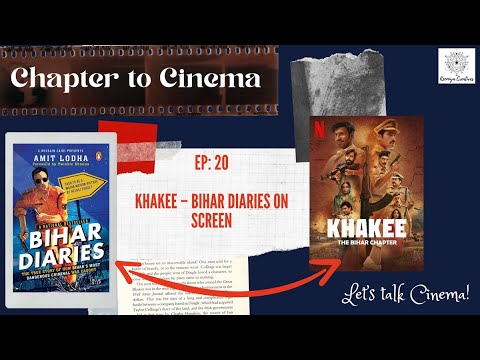
The latest episode of Chapter to Cinema returns with Bihar Diaries
This week, we dive into Khakee: The Bihar Chapter — the gritty Netflix series inspired by Amit Lodha’s thrilling memoir Bihar Diaries. We break down what worked, what didn’t, and how the real-life account translated onto screen.
From page to police chase, this one’s packed with insight, drama, and storytelling lessons.
About Bihar Diaries

Khakee: The Bihar Chapter is an Indian action thriller television series created by Neeraj Pandey and written by Umashankar Singh. It was produced by Shital Bhatia, under Friday Storytellers.It stars Karan Tacker, Avinash Tiwary, Abhimanyu Singh, Brijeshwar Singh Jatin Sarna, Ravi Kishan, Ashutosh Rana, Nikita Dutta, Aishwarya Sushmita, Anup Soni, Shraddha Das, Neeraj Kashyap and Bharat Jha.
This series is based in Sheikhpura district, Nalanda district and Patna district. Chandan Mahato, who was actually Pintu Mahato in real life, is a member of Ashok Mahto gang, which has been active in Nalanda and Sheikhpura for many years. The story is about how Sheikhpura SP Amit Lodha brings the Ashok Mahto gang to justice, while navigating his personal issues. (Source)
Watch our analysis of Bihar Diaries on Book Talk.
Introduction to Chapter to Cinema

Every week, we pick a movie based on a book and dissect it with a fine-tooth comb. We explore how the movie captures (or sometimes butchers) the essence of the book, the characters, and the plot.
We discuss the creative liberties taken, the performances, the direction, and whether the adaptation did justice to the original work. Think of it as a book club meeting the Oscars, where literature lovers and movie buffs come together to celebrate or commiserate over beloved stories.
Why We Do It

There’s something magical about seeing a story you love come to life on screen. But with that magic comes a whole lot of pressure for filmmakers to meet the high expectations set by the book. Our mission with Chapter to Cinema is to bridge the gap between these two mediums and foster a better understanding of the adaptation process.
We believe that by breaking down these adaptations, we can appreciate both the original works and their cinematic counterparts in a new light.
For authors, this segment offers a treasure trove of insights. Understanding how their work might be adapted can help authors think about their narratives in a broader context.
- What elements of their story are crucial and unchangeable?
- How might different mediums affect the storytelling?
By seeing their work through the lens of adaptation, authors can gain valuable perspectives that might even influence their writing.
The Fun and the Frustration
Every episode of Chapter to Cinema is a rollercoaster ride. We delve into what worked well—did the actors capture the characters’ essence? Did the director stay true to the book’s tone and pacing? We also don’t shy away from calling out what didn’t work—were there plot holes introduced in the movie that weren’t in the book? Did key scenes get cut or altered beyond recognition?

We sprinkle our discussions with fun trivia, behind-the-scenes tidbits, and even interviews with the people involved in making these adaptations.
This makes each episode not just informative but also entertaining and engaging.
Watch our Book to Screen Adaptations
Why Should You Watch It?
Whether you’re an avid reader, a cinephile, or both, Chapter to Cinema has something for you. It’s a great way to discover new books to read or movies to watch.
It’s also a fantastic forum for discussing your favorite adaptations and voicing your opinions. Maybe you loved how a certain book was adapted, or maybe you have a bone to pick with the director—either way, we want to hear from you!
For authors, tuning in to Chapter to Cinema can provide a wealth of knowledge.
It’s a crash course in what works and what doesn’t in adaptations, offering lessons on storytelling, character development, and pacing.
It’s also a chance to see how audiences react to changes made during the adaptation process, which can be incredibly insightful for any writer.
Conclusion
At the end of the day, Chapter to Cinema is about celebrating storytelling in all its forms. Whether you’re here to geek out over your favorite book, critique a lackluster adaptation, or learn something new about the writing and filmmaking process, we’ve got you covered. So, grab your popcorn and join us for a fun, insightful journey from page to screen.
Don’t forget to subscribe to our YouTube channel and hit the notification bell so you never miss an episode of Chapter to Cinema. Happy watching, reading, and analyzing!

Leave a Reply