
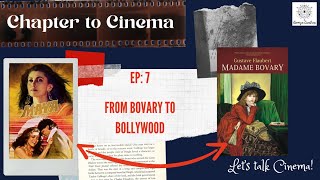
The latest episode of Chapter to Cinema analyses Maya Memsaab.
Let’s dive into one of the more curious cases of book-to-screen adaptations in Indian cinema: Maya Memsaab. This 1993 film, directed by Ketan Mehta, is an ambitious attempt at adapting Gustave Flaubert’s Madame Bovary into an Indian setting.
With Bollywood’s flair for drama, romance, and fantasy, Maya Memsaab delivers a unique—though sometimes confusing—take on the tragic tale of a woman caught in the whirlwind of passion, delusion, and disillusionment. It’s kind of like when a classic French novel gets invited to a full-on Bollywood party.
But did the film capture the essence of the original, or did it butcher poor Emma Bovary beyond recognition? Let’s find out!
The Novel: Flaubert’s Critique of Desire and Delusion
Before we dive into the movie, let’s take a moment to appreciate Madame Bovary, a novel that turned heads in the 19th century and continues to influence literature today. Flaubert’s Emma Bovary is a complex character—an unsatisfied woman trapped in provincial life, yearning for the passion and excitement she reads about in romantic novels. She embarks on a series of affairs and spends recklessly in a bid to escape her mundane existence, only to meet a tragic end.
Emma’s character is a critique of both the unrealistic expectations fed by romantic ideals and the harsh reality of unfulfilled desires. It’s a delicate balance of vulnerability and ego, making her one of literature’s most fascinating characters.
Watch the full episode on Maya Memsaab on Book Talk
The Movie: A Bollywood Spin on a French Tragedy
Now, Maya Memsaab takes this tale of yearning and transposes it to an Indian setting, with Deepa Sahi playing the titular Maya. At first glance, Maya seems like Bollywood’s Emma—trapped in a dull marriage, yearning for more, swept away by dreams of passion and grandeur. However, the creative liberties taken in the film leave you wondering: is this a faithful adaptation, or did we take a wrong turn somewhere between Paris and Mumbai?
Let’s break it down:
- Creative Liberties Galore: Oh, where do we begin? The most notable change is that the movie leans heavily into fantasy and surrealism, whereas Flaubert’s novel is a grounded exploration of human desire. Maya Memsaab plays with magical realism, blending dream sequences with reality in a way that leaves viewers both mesmerized and slightly confused. Maya, unlike Emma, doesn’t just fantasize about escape—her daydreams are visual spectacles that literally take flight on screen.
- Plot Holes & Missed Moments: In adapting such a richly layered novel, the movie inevitably skips over key plot points or reimagines them in ways that lose their original weight. For instance, Maya’s motivations for her affairs feel undercooked compared to Emma’s deep psychological turmoil. Where Emma’s descent is slow and tragic, Maya’s spiral sometimes feels rushed, as if the movie can’t decide whether it’s telling a cautionary tale or a dreamy melodrama.
- Character Study: Emma Bovary is all about nuance—she’s both a victim of her circumstances and an active participant in her own downfall. Deepa Sahi’s Maya captures some of this complexity, but the film’s whimsical tone detracts from the grounded character study that Flaubert masterfully presents. Maya is more of a free spirit, wandering through her daydreams and affairs, whereas Emma’s actions are laden with existential despair. Did Maya Memsaab do justice to Emma’s tragic allure? Yes, and no. Maya is fascinating, but she’s not quite as conflicted as her French counterpart.
- The Husbands: Bovary vs. Memsaab: Charles Bovary, Emma’s husband, is a bumbling yet well-meaning doctor who represents the kind of humdrum life that drives her to seek more. In Maya Memsaab, Farooq Shaikh plays Dr. Charu Dutt, and while his portrayal is solid, the film glosses over his role in Maya’s dissatisfaction. He’s there, but we don’t feel the weight of Maya’s disillusionment with him as deeply as we do with Emma’s disillusionment with Charles.

Behind the Scenes: Fun Facts!
- Did you know that the film caused quite a stir because of its steamy scenes? Deepa Sahi’s bold portrayal of Maya, coupled with the film’s sensuality, was considered groundbreaking in Indian cinema at the time.
- Shah Rukh Khan, still relatively new to Bollywood at the time, plays a small yet pivotal role. His chemistry with Deepa Sahi adds an electric charge to the film’s romantic moments.
Read all other episodes of Chapter to Cinema.
Final Verdict: A Quirky Experiment That Misses Some Marks
So, does Maya Memsaab capture the essence of Madame Bovary? In some ways, yes—Maya’s quest for more is deeply rooted in Emma’s character. But in other ways, the film takes too many creative liberties, losing some of the novel’s sharp critique of societal expectations and personal downfall.
For literature lovers, Maya Memsaab is an interesting case study in adaptation. It’s bold, visually stunning, and a little bit weird—in true Bollywood fashion. But for Madame Bovary purists, the film may feel more like a fever dream than a faithful retelling of Emma’s tragic story. Either way, it’s a fascinating watch for anyone interested in how a classic French novel can be reimagined in an Indian cinematic landscape.

Leave a Reply