
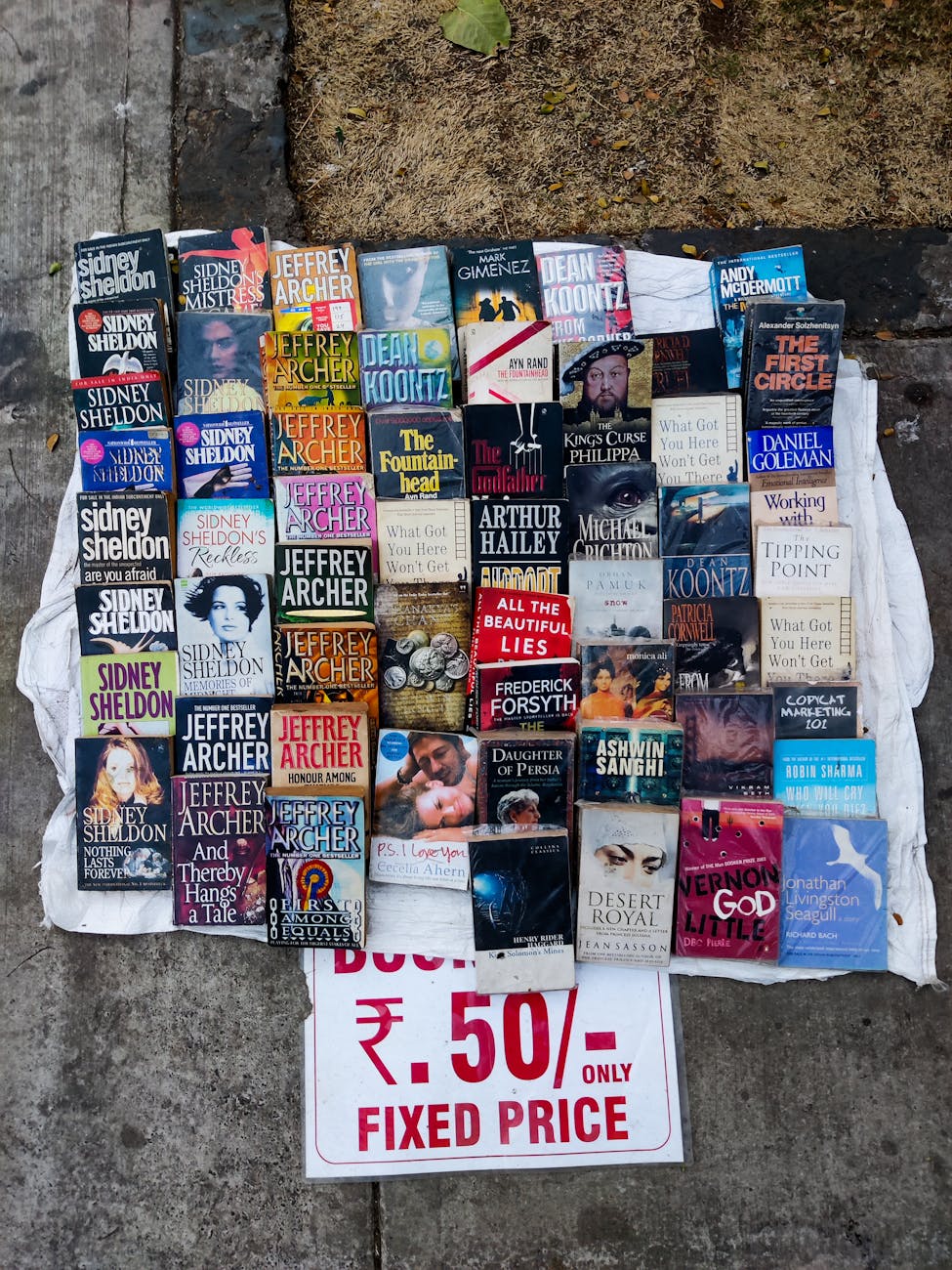
In this blogpost, we analyze the culture of reading in India.
India’s literary landscape today is animated not only by what is being written, but by where and how literature circulates. Over the past two decades, literary festivals, independent bookstores, translation initiatives, and prize circuits have created a visible ecosystem around books. Yet visibility does not automatically translate into readership, and the relationship between literary culture and actual reading habits remains complex.
Earlier this year, The Guardian ran a headline asking whether India, despite hosting a remarkable number of literature festivals, is truly reading. The provocation sparked debate, not merely because of its framing, but because it exposed an ongoing tension: does the proliferation of literary events signal a deep reading culture, or a performative one?
To answer that question, one must first understand what literary festivals in India actually represent.
The Festival as Cultural Theatre

Events such as the Jaipur Literature Festival have become global cultural fixtures. They gather novelists, poets, translators, historians, journalists, and public intellectuals into shared physical space. Panels are packed. Book signings stretch into long queues. Conversations spill beyond auditoriums into cafés and courtyards. But festivals are not bookstores. They are stages.
They function as sites of intellectual exchange and social visibility, where literature intersects with performance, politics, and public discourse. Attendees often arrive as much for conversation and community as for book purchases. The literary festival in India is as much a social phenomenon as it is a reading one.
This does not invalidate its cultural role. It simply means that festivals operate differently from traditional markers of reading culture. In a country shaped by strong oral traditions and collective forms of knowledge-sharing, listening to a writer speak may be as meaningful as privately consuming their text. The festival amplifies literature’s presence in public life, even if it does not directly correlate to measurable increases in reading-for-leisure statistics.
Book Markets: Between Visibility and Access

Parallel to festivals, India’s book markets have undergone quiet but significant transformation.
Independent bookstores in cities such as Delhi, Bengaluru, Kolkata, and Chennai have carved out curated spaces for literary fiction, translations, and small-press titles. These stores often act as micro-communities, hosting readings and discussions that foster sustained engagement rather than transactional buying.
At the same time, online retail has expanded access, particularly in tier-two and tier-three cities where brick-and-mortar bookstores may be limited. Digital marketplaces have made niche literary titles available beyond metropolitan centres, subtly reshaping the geography of readership.
However, access remains uneven. Price sensitivity, language barriers, and educational disparities all influence reading patterns. For many readers, second-hand book markets, libraries, and informal sharing networks remain crucial. India’s reading culture cannot be assessed solely through sales data from premium bookstores or English-language bestsellers. It is diffused, multilingual, and often informal.
Recommended Reads: Literary Fiction in India
Language and the Question – Who Is Reading in India?

One of the most persistent distortions in conversations about Indian readership is the tendency to equate reading in India with English-language publishing. Yet a vast proportion of literary engagement in India occurs in Hindi, Bengali, Tamil, Malayalam, Marathi, Kannada, and numerous other languages.
When translated works by authors such as Geetanjali Shree or Banu Mushtaq gain international recognition, they illuminate a reality long present but underacknowledged: robust literary traditions flourish outside English. Translation has begun to bridge these ecosystems, but they have always existed.
The question, then, is not simply whether people are reading in India, but what they are reading, in which language, and through which medium.
Reading in India is often embedded within educational aspiration, competitive exam preparation, and professional advancement. Leisure reading competes with economic pressures and digital entertainment. Yet even within these constraints, book fairs draw crowds, regional publishers sustain loyal audiences, and literary discussions circulate widely on social media.
Reading in India may not always take the form of solitary immersion in a hardback novel purchased at a festival stall. It may occur in photocopied editions, WhatsApp-shared excerpts, borrowed library copies, or serialized magazine publications. To overlook these modes is to misunderstand the ecology of reading in India.
Do Festivals Create Readers?
The relationship between literary festivals and readership is indirect but significant. Festivals create visibility for authors who might otherwise remain confined to niche circles. They enable readers to encounter unfamiliar genres and languages. They generate press coverage that extends beyond the event itself.
More importantly, they legitimise literature as part of public conversation.
When audiences gather to discuss fiction, translation, censorship, or craft, they reinforce the idea that literature matters — not only aesthetically but socially. This symbolic validation can influence long-term reading habits, particularly among younger attendees who witness writers treated as cultural figures rather than peripheral artists.
However, festivals alone cannot cultivate sustained reading practices. That work requires affordable books, strong library networks, school curricula that encourage pleasure reading in India, and a publishing industry attentive to linguistic diversity.
Literary Fiction Within This Ecosystem
For writers of literary fiction, this ecosystem presents both opportunity and ambiguity. Festivals may offer platforms, but they do not guarantee readership. Book markets may expand distribution, but they also intensify competition. Visibility can be mistaken for impact.
The rise of literary fiction in India must therefore be understood not only in terms of prize recognition or festival programming, but in terms of patient readership built over time. Literary writing thrives where there is space for reflection, rereading, and discussion — conditions that cannot be manufactured overnight.
What India’s vibrant literary calendar demonstrates is not necessarily the volume of reading in India, but the cultural desire for engagement with ideas. Whether that desire consistently translates into book consumption remains uneven, shaped by class, language, and access. Yet the infrastructure for literary culture — festivals, independent presses, translation networks, bookstores — is undeniably stronger than it was two decades ago.
Beyond the Binary
The question “Are people reading in India?” may be too blunt to capture a nuanced reality. A more useful inquiry might be: how is reading in India evolving, and what forms does it take across languages and regions?
Literary festivals, book markets, and translation initiatives together create a framework in which literary fiction can circulate more widely than before. They do not guarantee readership, but they sustain possibility. In a multilingual nation negotiating rapid social change, that possibility matters.
If the culture of reading in India is not uniform, it is nevertheless dynamic. It exists in fragments, across platforms, within classrooms, on festival stages, and in second-hand bookstalls. To measure it requires attentiveness to plurality rather than reliance on singular metrics.
For writers and publishers alike, the task is not simply to celebrate the growth of literary infrastructure, but to deepen it — to ensure that visibility translates into access, and access into sustained engagement. Only then can the rise of literary fiction be understood not as an event, but as a durable shift in India’s cultural life.

Leave a Reply