
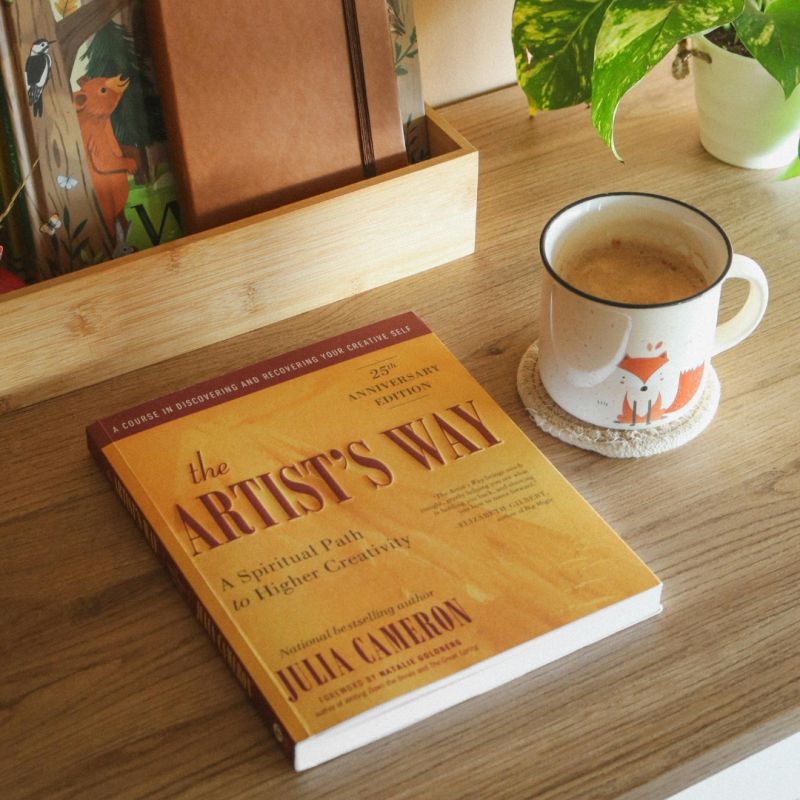
Namrata shares her journey of rediscovering reading and writing, as a student.
About a year and a half ago, I designed a kind of DIY MFA for myself.
I hesitate to even call it a program because it was never especially systematic. It was simply an attempt to return to literature as a student.
For years, I had been reading in fragments, between deadlines, between edits, between obligations. Even when the reading was meaningful, it was often tethered to utility. I was reading to assess, to advise, to produce, to keep pace.
What I missed was absorption. So, I began constructing a private course of reading and re-reading. I returned to writers I had loved years ago and discovered, unsurprisingly, that I had changed more than the books had. I read novels alongside letters, criticism alongside diaries, interviews alongside essays on form. I followed obsessions instead of efficiency. And gradually, something in my relationship with language altered again.
I began reading as a writer. My reading went beyond the plot or theme. Now it involved cadence, architecture, pressure, and omission. To the hidden mechanics of a paragraph. To the way certain writers move thought across a page almost invisibly. To how restraint can generate emotional force more powerfully than declaration. I found myself lingering over transitions, interrogating syntax, copying passages out by hand simply to understand how they breathed.
The return of sustained attention was the most meaningful part of the experience. There is a particular intellectual pleasure in studying without urgency. Without assessment. Without the constant demand to transform every encounter with art into output, opinion, or visibility.
I think many of us slowly lose that mode of engagement as adults. We continue to consume culture, certainly. We remain professionally informed. But the deeper habits of apprenticeship, like slow reading, re-reading, note-taking, and intellectual wandering, become increasingly rare because they are difficult to justify within economies of productivity.
This DIY MFA reminded me that one can still cultivate an intellectual life outside formal institutions. That one can construct a rigorous education through curiosity, discipline, and sustained intimacy with texts.
Certain books slowed me down. Certain essays sharpened perception. Certain sentences rearranged thoughts itself. And over time, I noticed the effect on my writing as well.
I became less interested in speed, less seduced by immediacy, less anxious about visibility. More willing to remain inside uncertainty. More attentive to texture, silence, rhythm, and structure. More patient with the long gestation period serious writing often requires. In retrospect, the most valuable thing this experience gave me was not productivity or expertise.
More than anything else, this gave me back the pleasure of being a student. And I suspect that is a condition worth returning to repeatedly, for anyone who hopes to remain alive to literature.

Leave a Reply