
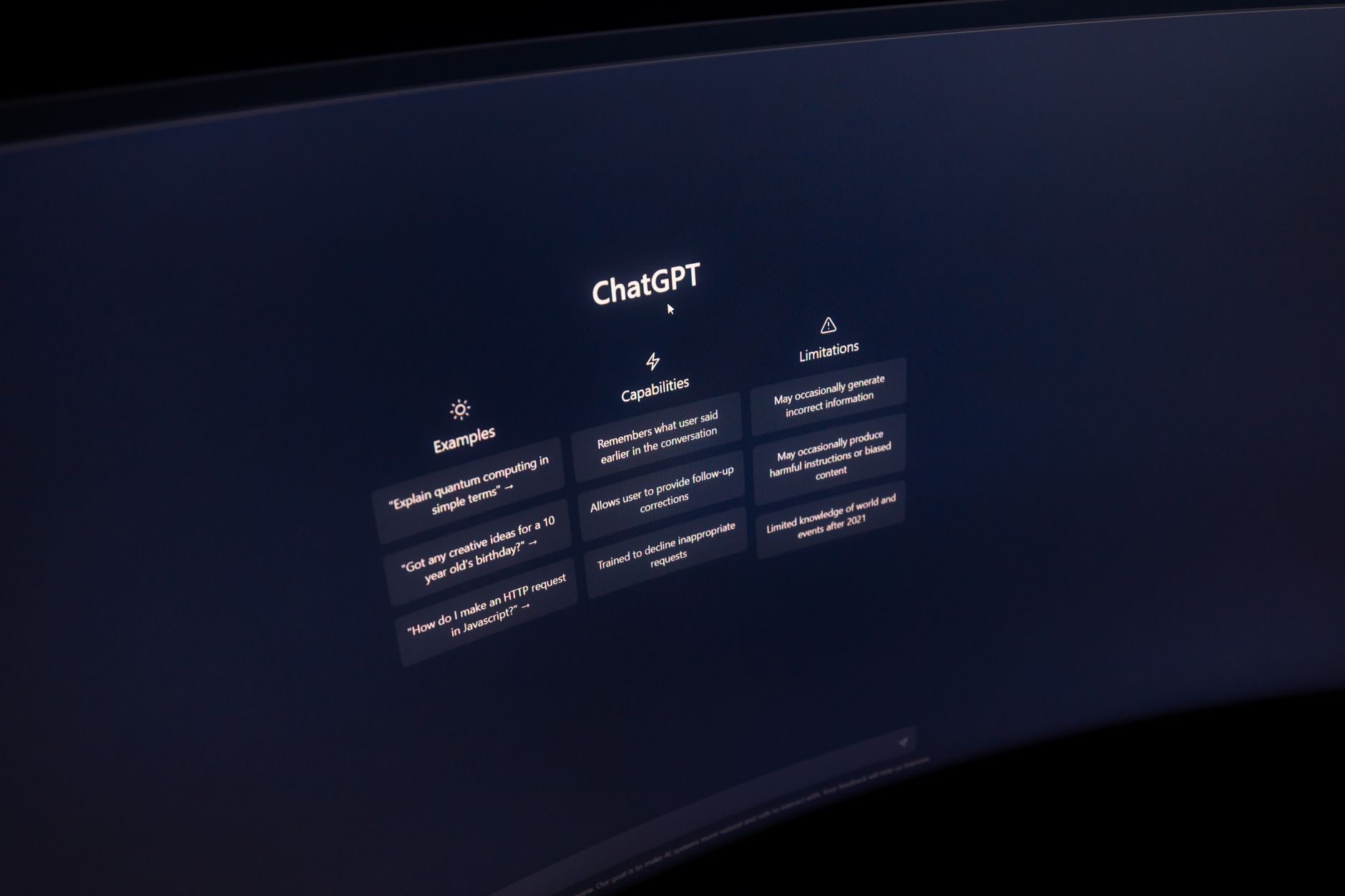
In this blogpost, we analyse the impact of AI Manuscript Editing and why authors might incur higher editing costs.
Generative AI has changed the way people begin writing. A blank document that once demanded hours of thinking can now produce a few thousand words in minutes. For someone with a book idea but little writing experience, the attraction is obvious. You just have to provide a prompt, describe the subject, and a manuscript begins to take shape.
The problem often appears later, when that manuscript reaches an editor.
Across the publishing and ghostwriting industry, there is a growing pattern of authors approaching professionals with manuscripts that have been substantially generated using ChatGPT or other AI tools. The expectation is usually that the text needs what any first draft needs, which is editing, polishing, restructuring and perhaps some fact-checking.
In practice, some of these manuscripts require something much more fundamental as they need to be written again.
That distinction is becoming increasingly important as AI manuscript editing becomes a service authors are actively looking for. The issue is not simply whether artificial intelligence can produce grammatically correct prose. It can. The question is whether the resulting manuscript contains enough original thought, personality, specificity and narrative material for an editor to develop into a finished book.
The rise of the AI refugee

The publishing industry has even acquired a term for authors who discover this problem after attempting to write their books with AI.
Dan Gerstein, CEO of Gotham Ghostwriters, has referred to this group as AI refugees, referring to people who tried using ChatGPT to write their books and subsequently found that the results were unsatisfactory or unusable, leading them to seek professional ghostwriting help. The term is deliberately memorable, but the underlying phenomenon is more interesting than the label. (Source)
An author can now produce a manuscript without having developed the skills traditionally required to write one. What AI cannot add is the accumulated thinking that gives a book its individuality. Like the author’s experiences, observations, contradictions, intellectual framework, anecdotes, research and understanding of the intended reader. That becomes visible when an editor tries to work with the material.
Why AI Manuscript Editing can be difficult

A good editor is not simply correcting grammar. Depending on the stage of the project, an editor may be looking at the book’s argument, structure, pacing, character development, narrative voice, factual consistency, repetition and overall coherence. At the sentence level, the work may involve clarity and rhythm. At the book level, it involves understanding what the author is actually trying to say.
A human first draft, even a poor one, usually contains clues. There may be an awkward story that is actually the most interesting part of the chapter. There may be a peculiar phrase that reveals the author’s personality. There may be a half-developed argument that an editor can help the author pursue. There may be ten pages of unnecessary material surrounding two paragraphs of genuinely original insight.
Editing is possible because there is something underneath the imperfect writing that is worth preserving.
An AI-generated manuscript can reverse that relationship. It may look finished because the sentences are fluent, the paragraphs are properly formed and the chapters appear logically arranged. Yet once an editor starts asking what each section is actually contributing, the weaknesses become more apparent.
The prose may be polished, but the thinking underneath it can be thin. An AI system can generate a chapter about leadership. It cannot automatically know which particular leadership experience changed the author’s understanding of failure, what happened in the room when the decision was made, what the author got wrong at the time, or why that memory still matters twenty years later. Those details are the raw material of a book.
When editing turns into rewriting
This is where the economics of AI-assisted writing become complicated. An author may reasonably assume that producing the first draft with AI will reduce the cost of professional writing. If the manuscript already contains 50,000 words, surely the editor only has to clean them up. Not necessarily.
If the manuscript has structural problems, an editor can restructure it. If the sentences are weak, an editor can rewrite them. If the argument needs development, an editor can work with the author to strengthen it. But if the manuscript does not contain enough original material in the first place, there is very little to edit.

The professional may then have to go back to the author and begin extracting the material that should have informed the manuscript from the beginning: personal experiences, interviews, memories, research, opinions, examples and stories. At that point, the assignment has moved from editing to developmental writing or ghostwriting. And ghostwriting a book from the ground up is a substantially different engagement from editing an existing manuscript.
This is one reason an AI-generated first draft does not automatically make a book project cheaper. In some cases, it creates an additional layer of work because the professional has to determine what can be retained, what needs to be substantially rewritten and what needs to be replaced altogether.
The strange problem of prose that sounds good but says little!
One of the more difficult characteristics of AI-generated writing is that it can sound competent. That makes it harder for inexperienced writers to recognise the problem.
A paragraph can be grammatically correct, smoothly structured and perfectly readable while still being generic. A chapter can contain all the expected components of a chapter without giving the reader a reason to remember it. This is particularly problematic in memoirs, business books, leadership books and personal-development titles, where the author’s individual perspective is often the reason for the book’s existence.
Consider the difference between these two approaches.
- An AI prompt might produce a chapter about the importance of resilience, complete with familiar observations about failure, perseverance and learning from setbacks.
- A professional writer working with the same author might instead spend an hour asking about the specific failure that changed the author’s career. What happened? Who was present? What did the author believe before the event? What became clear afterwards? What did the author do differently?
The second process produces material.
The difference is better language and better source material.That is why professional ghostwriting is done by a person. The work begins well before the sentence is written.
Does that mean AI has no place in writing? Not at all!
There are many legitimate uses for AI in a writer’s workflow. It can help organise research notes, brainstorm questions, identify repetition, create preliminary outlines, suggest alternative structures or assist with certain routine language tasks.
The question is whether AI is being used as a tool for the author’s thinking or as a substitute for the thinking itself. That distinction matters.
An author who has already developed a clear argument and uses AI to organise a set of notes is in a very different position from an author who gives the system a one-paragraph idea and asks it to produce an entire 60,000-word book.
There is also a growing emphasis in publishing on transparency, confidentiality and human responsibility. NYU Press’s current policy, for example, permits certain assistive uses of AI but prohibits authors from putting their work into public AI systems and stresses that authors remain responsible for originality and factual accuracy.
The Authors Guild has similarly warned about authors’ manuscripts and personal information being uploaded to consumer AI systems without appropriate permission or safeguards.
For authors, therefore, AI raises questions that go beyond writing quality. There are also questions of copyright, confidentiality, attribution, originality and the handling of unpublished work.
What does this mean for editors?
For editors, AI-generated manuscripts create a different kind of assessment problem. The first question can no longer simply be, “How much editing does this manuscript need?”
It may have to be: “What kind of intervention does this manuscript actually need?”
A manuscript may require copyediting. It may need developmental editing. It may need restructuring. Or it may not be an editing project at all.
An editor may have to recommend that the author step back from the existing draft and rebuild the manuscript around their own material.
That conversation can be difficult, particularly when an author has already invested time and money in generating the AI draft. But continuing to polish prose that fundamentally does not work can be less useful than acknowledging the problem early.
There is another reason human editors remain important. They can respond to the person behind the manuscript. An editor can notice that a seemingly minor anecdote deserves an entire chapter. They can challenge an author who is being too cautious. They can recognise when the author’s strongest argument is buried under conventional language. They can ask a question that changes the direction of a book. That is editorial judgement.
How Keemiya Creatives approaches AI-generated manuscripts
At Keemiya Creatives, the question is always what the manuscript needs now.
Some AI-assisted manuscripts can be edited effectively. Others need substantial developmental work. In some cases, the most sensible route is to start again, using the AI-generated draft only as a reference for the author’s original intentions.
We also work with authors who have an idea, experience or body of knowledge but do not want to write the manuscript themselves. That is where ghostwriting can be more appropriate than trying to turn an AI-generated document into a finished book.
The process is fundamentally different. Instead of asking a machine to invent the book from a prompt, a ghostwriter works with the author to uncover the material that only the author can provide and then develops it into a coherent manuscript.
That might involve interviews, research, extensive outlining, multiple drafts and conversations about voice and structure. The result should be a manuscript that sounds human, like the person whose name is on the cover. AI can produce a draft. A book needs something more.
The current discussion about AI and writing is sometimes reduced to a simple question: Can AI write a book?
Technically, it can produce something that looks like one. For authors, publishers and editors, however, the more useful question is different: Can AI produce the particular book this author has a reason to write?
That is where the distinction between generating text and developing a manuscript becomes important. The technology can make the blank page less intimidating. It can accelerate certain parts of the writing process and help authors experiment with ideas. But when a generated manuscript arrives on an editor’s desk, the speed of its creation is no longer the relevant measure. The relevant measure is what remains underneath the words.
If there is a strong idea, a distinctive voice, substantial source material and an author willing to engage with the editorial process, AI may be one tool among many.
If there are 50,000 polished words but no real book beneath them, an editor cannot manufacture the missing authorial substance simply by correcting the sentences.
That is when an AI manuscript editing project can become a much larger writing project and why some authors who tried to avoid the cost of professional writing eventually find themselves hiring an editor, developmental writer or ghostwriter anyway.
The lesson is not that authors should never use AI. It is that writing a book and generating the words of a book are two different things. And increasingly, authors are discovering the difference only after the manuscript is already written.
Looking for help with AI Manuscript Editing
Keemiya Creatives works with authors on manuscript editing, developmental editing and ghostwriting. If you have used AI to develop your manuscript and are unsure whether it needs editing, restructuring or a complete rewrite, our team can assess the material and recommend the appropriate way forward.

Leave a Reply