
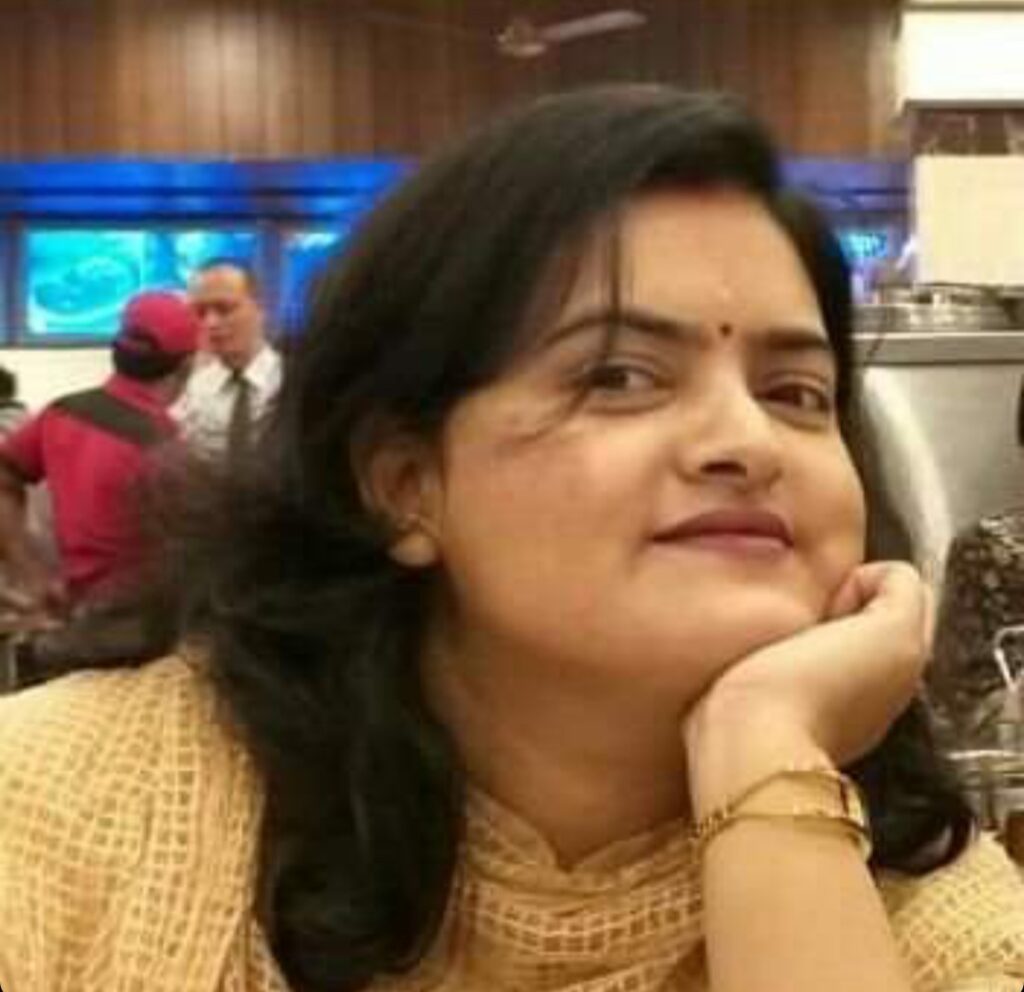
Team KC is in conversation with Tarang Sinha where she talks about her journey as a translator and the lessons she learnt.
Tarang Sinha is a bilingual writer, translator. Her translations include Ramrajya by Ashutosh Rana, Don’t You Quit by Nishant Jain, published by Westland Books; A Case of Exploding Mangoes by Mohammed Hanif.


Her articles and stories have been published in Good Housekeeping India, Child India, The Hindu, Woman’s Era and New Woman. She writes Hindi stories for a popular radio show ‘Yaadon Ka Idiot Box’ with Neelesh Misra. She is the author of ‘We Will Meet Again’ and a self-taught painter. She blogs at tarangsinha.blogspot.com.
Team KC spoke to her about her journey as a translator.
Team KC: You have translated a diverse range of books over the past three years. What initially drew you to literary translation, and how did your journey begin?
Tarang Sinha : Thank you, Namrata.
Like everything I am doing currently, translation happened by chance. A fellow writer, Dr. Gaurav Yadav, shared a facebook post with me via Twitter DM. Hind Yugm was looking for a translator for their Hindi best selling book Ruk Jaana Nahin by Nishant Jain. They wanted a translation sample of a particular section of the book, written in our own voice. I sent one without any expectation, as, to be honest, translation wasn’t on my mind. I completely forgot about it, until one day, I received a reply to my submission. They liked my translation and style. And so began a new and exciting journey.


For Ramrajya, my second translation — a project that came after one and a half years —I am truly thankful to Ms Vaishali Mathur (Penguin Books), for she introduced me to Mr. Raju Arora (Kautilya Books), the publisher of Ramrajya. Later, I collaborated with him on four more books, including A Case of Exploding Mangoes.
Team KC: Each translation project poses unique challenges. How did you navigate the cultural and linguistic nuances in books like A Case of Exploding Mangoes or Ramrajya?
Tarang Sinha : Ramrajya was challenging in various ways. First off, it’s mythology, and you have to keep your voice in sync with the genre. Apart from that, it was important to truly understand the context and deeper meaning of every situation and conversation. Moreover, Ashutosh Ji writes in very expressive and ‘klisht’ Hindi. It was almost impossible to match the beauty of his writing, however it inspired me to approach the work with full sincerity and stay true to the spirit of the text. It was an immersive and enlightening experience.

A Case of Exploding Mangoes by Mohammed Hanif is very sharp and seriously humourous. A large portion of the book deals with the air force background, which was a bit tricky. So, it involves a bit of research to get the terms right. Again, a wonderful experience.
Team KC: As a bilingual writer, how do you decide when to stay faithful to the original text and when to adapt certain phrases or expressions for a more resonant impact in the target language?
Tarang Sinha : I believe we should always stay faithful to the original text. Having said that, it’s sometimes wise to adapt specific phrases to avoid awkwardness. After all, they say a translation succeeds when it doesn’t read like one. But it depends.
Some authors are very rigid about making any changes, even when the change might improve the flow. In such cases, there’s little I can do. Others are more flexible. For my first translation, Don’t You Quit, I had the liberty to write in my own voice and even add a few things if they benefited the manuscript, without changing the context, of course. That said, I try not to remove anything.
I believe we should always stay faithful to the original text.
Tarang Sinha (Author & Translator)
Team KC: Among the four books you have translated so far, which one challenged you the most and why?
Tarang Sinha : Ramrajya by Ashutosh Rana, for sure. First off, Ashutosh Ji’s writing falls under the category of ‘Klisht Hindi’ —beautiful, expressive and difficult. Moreover, Ramrajya is mythology.
So it was crucial to understand not just the words but the context and undertones. Keeping the beauty and richness of his writing intact in the translation was challenging. Still, it was important (and rewarding) to keep it as close as possible.
Team KC: How does your experience as a novelist and columnist influence your approach to translation? Do you find yourself instinctively editing or interpreting beyond the source text?
Tarang Sinha : Being a novelist and columnist, I can’t deny that sometimes I feel the urge to interpret beyond the source. So, sometimes it’s like an internal conflict, but the novelist ultimately decides to step aside because as a translator, we are not supposed to do that.
As for editing, it’s not as overwhelming in translation as it is when I am writing my own story. Our first concern of translating is to get the text and nuances right; to not wander into interpretation or start thinking how something could be said in a different way, for the goal is to keep the translated text as close as possible to the original. So the clarity of purpose keeps the editor in me quiet, most of the time.
Team KC: You also write Hindi stories for Yaadon Ka Idiot Box. How different is your creative mindset when crafting original stories compared to translating existing ones?
Tarang Sinha : Very different. When I am writing my own story, I constantly think of various ways to make the narrative and dialogues more interesting and engaging. I often delete paragraphs or change situations entirely. But I can’t do that while translating. A situation is already there and I have to stay true to that.
Team KC: What does your typical translation workflow look like—from the first reading of the manuscript to the final draft? Do you follow a set process or adapt based on the project?
Tarang Sinha : I do not follow a set process in anything I do. As weird as it may sound, I avoid reading the original text very carefully before I start the translation. I am not someone who enjoys re-reading books. Once I read a book, I lose interest. And I can’t afford to lose interest when I am going to translate it. So I might read a paragraph multiple times while translating, but not the entire manuscript.
If I get to translate a book that I absolutely love, that would be a different matter altogether.
Team KC: How do you collaborate with authors, especially when they are involved in the translation process? Was it different, for instance, working with someone like Ashutosh Rana?
Tarang Sinha : Strangely, I haven’t collaborated directly with any author yet. The first one came through an online contest. For others, I’ve been approached by publishers or people.
Read more Translators’ Interviews
Team KC: Given your strong background in both English and Hindi, do you feel one language presents more creative flexibility or emotional depth for storytelling?
Tarang Sinha : That’s a very interesting question! When it comes to emotional depth in storytelling, I slightly lean toward Hindi. Although I work in both languages, Hindi comes more naturally to me and I am more expressive in it.
That said, there are certain moments when I find it easier to express certain ideas, imagery and emotions in English mainly because of its incredibly vast vocabulary, range of phrases and idioms. I am not saying that Hindi lacks these, but using klisht Hindi or traditional muhavaras doesn’t really fit in the contemporary style of writing, which can feel a tad limiting at times.
Team KC: What advice would you give to aspiring translators who want to work across genres and languages, as you have successfully done?
Tarang Sinha : You are very kind.
I have a long way to go. But if I had to give one piece of advice, I would say read. Read widely. Novels, translations, essays, anything that helps you absorb both languages. And write. Practice translation, even if nobody is reading. Or maybe you can make them available for readers on a blog or social media platform.
Be in touch with writers, translators and publishers, not just for opportunity, but to understand how it works.
OK, that’s three pieces of advice. 🙂
Disclaimer: This page contains affiliate links.
About Tarang Sinha

Languages she translates in: Hindi – English – Hindi
Notable Projects:
- We Will Meet Again (a novel)
- Ramrajya by Ashutosh Rana (translation)
- A Case of Exploding Mangoes by Mohammed Hanif (translation)
What is she looking for: From this opportunity, I am looking to expand my reach and connect with a broader audience through a wonderful platform that focuses on clear, engaging and on point communication. I am excited to work with a fantastic team that values the importance of linguistic accuracy and cultural sensitivity.
Links
- Twitter: https://twitter.com/TarangSinha
- Instagram: https://instagram.com/tarang.sinha
- LinkedIn: https://tinyurl.com/545ac4j6


Leave a Reply